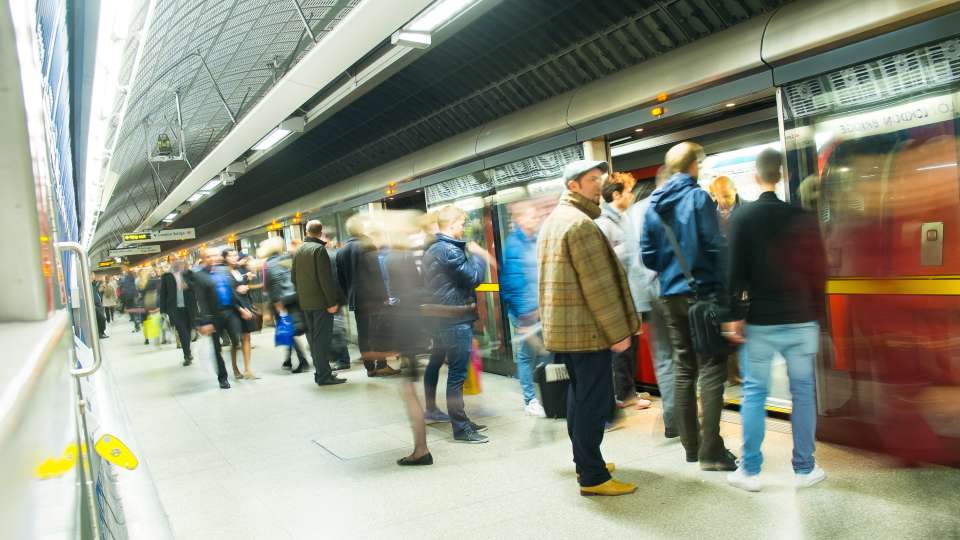
The hidden health risk on the London Underground
According to London Assembly member and Labour’s transport spokeswoman Elly Baker, Londoners are being subjected to dangerous levels of noise on their daily commute. Originally reported by the BBC, headlines this week showed how TfL received more than 700 noise complaints over the last 3 years.
How loud is the tube compared to everyday sounds?
According to data from the London Mayor’s office, passengers are frequently exposed to dangerous noise levels on the tube, with the Northern, Victoria and Jubilee lines often reaching over 100 dB.
To put that into context, that’s about as loud as a motorbike, maximum volume on an MP3 player, or a nightclub. In the workplace, employers have to provide hearing protection for employees in environments that reach 85 dB.
What happens to your ears when exposed to loud noise?
While the odd tube journey isn’t likely to cause any lasting harm, regular, prolonged exposure can cause permanent damage. Inside our ears are tiny, delicate hair-cells – any sounds above 85 dB can start to damage these cells (which don’t regenerate), leading to noise-induced hearing loss.

Signs your hearing may be affected
People who suffer from noise-induced hearing loss typically lose the ability to hear high frequencies first. This means you might struggle to hear children’s or women’s voices clearly, which are higher-pitched than men’s voices.
You might also have difficulty in conversations, particularly when there’s lots of background noise. People may seem like they’re mumbling as higher-pitched consonant sounds like ‘th’, ‘f’ and ‘k’ become more difficult to pick up on.

Five simple tips for protecting your hearing on the Tube
There's no need for commuters to panic about their daily Tube journey, but being aware of noise exposure is a sensible part of looking after your hearing. Below are some simple steps that passengers can take to protect their hearing.
- Consider noise-reducing earplugs. Using a pair of reusable earplugs can help reduce exposure during particularly loud sections of the Underground.
- Resist turning up your headphones. It can be tempting to increase the volume of music or podcasts to drown out the noise of the tracks. However, this can add to your overall noise exposure. Noise-cancelling headphones may help you listen comfortably at a lower volume, although they aren't a substitute for certified hearing protection.
- Give your ears a break. If you've had a particularly noisy journey, consider spending some time in a quieter environment afterwards. This can help limit your overall noise exposure throughout the day.
- Look out for changes in your hearing. Ringing, buzzing or muffled hearing after a journey can be signs of excessive noise exposure. If these symptoms persist, it's worth arranging a hearing assessment. Sudden hearing loss should always be treated as an urgent medical issue.
- Keep on top of your hearing health. If you're regularly exposed to loud environments, routine hearing checks can help you monitor any changes over time, even before they become noticeable in everyday conversations.
When to book a hearing check
If you’re worried about your hearing in any way, it’s worth booking a free hearing health check-up with Audika.
Remember, your hearing is connected to your overall well-being, so make a hearing test part of your annual health routine, especially if you’re over 55, in the same way you’d regularly visit a dentist or optician. Follow the link to book online today.